
SEO work eats up a ton of time. Website owners often spend hours digging through keywords, planning content, and checking rankings.
AI tools can now handle most of these SEO tasks automatically, saving you time while improving your website’s search rankings. These smart tools use machine learning to find the best keywords, write content, and watch your competitors.
Let the AI handle the technical SEO stuff while you focus on your business. The right AI tool can boost your website traffic and search visibility without the grind of manual work.
1) Outrank
Outrank is an AI-powered SEO tool that helps you automate key optimization tasks. It focuses on improving your search rankings using data-driven insights and automated processes.
The platform analyzes your pages against top competitors and gives you specific recommendations. You get actionable steps to boost your content’s SEO based on what works for high-ranking pages.
Outrank automates keyword research and reveals content gaps in your niche. It highlights topics your competitors rank for but you don’t, so you can target new opportunities.
Automated task management keeps SEO workflows moving without you repeating the same chores. You’ll have more time for strategy and content creation.
Track your ranking progress and measure the impact of your changes. Outrank shows you clear metrics so you know exactly how your tweaks affect visibility.
If you want to streamline SEO without losing control, Outrank makes sense. It balances automation with customization, so you can adjust your approach to fit your goals.
Try OutRank here
(Use Code “Conor” for a 10% discount)
Pros:
Cons:
Pricing:
2) KoalaWriter
KoalaWriter is an AI writing tool built for SEO content creation. It’s all about making blog posts and web pages that actually show up in Google search.
The tool draws on real-time Google data to craft content. This way, it knows which keywords make the most sense for your topic.
KoalaWriter can write long blog posts, product descriptions, and full web pages. It structures content in a way that search engines love.
Keyword research and semantic analysis come built in. Your content gets more relevant to what people are searching for.With just one click, you can generate a whole article. The tool keeps things easy but still packs in strong SEO features.
KoalaWriter integrates keywords naturally. It gets how different keywords connect to each other and your main topic.The interface is simple, even if you’re new to SEO. You don’t need technical know-how to make SEO-friendly content.
It helps you create Google-friendly blog posts with proper structure. That can boost your chances of ranking higher.
Pros:
Cons:
Pricing:
3) Arvow
Arvow is an AI-powered blogging platform that automates SEO content creation from start to finish. You can generate long-form articles, optimize them, and publish directly to your website.
The real-time AI SEO editor gives you live suggestions as you write. It points out where to put keywords, how to set up headers, and which links to add.
Just enter keywords, titles, or descriptions to produce articles tailored to your SEO goals. The tool handles keyword strategy and internal linking automatically.
Arvow fits both solo bloggers and agencies. Manage teams and multiple websites from a single dashboard.
The platform connects with various content management systems. You can automate your whole blogging workflow without jumping between different tools.
Pros:
Cons:
Pricing:
4) Semrush
Semrush stands out as one of the most complete AI SEO tools out there. It brings together a bunch of digital marketing features in one place.
The AI features in Semrush automate loads of SEO tasks. You can track your website rankings across thousands of keywords, and the tool sends alerts if your positions shift.
Semrush uses AI to speed up keyword research. You get suggestions for related keywords and quick search volume data. The content optimization feature helps you write better articles, too.
APIs let Semrush connect with other tools. You can automate reports and share data between platforms, saving hours every week.
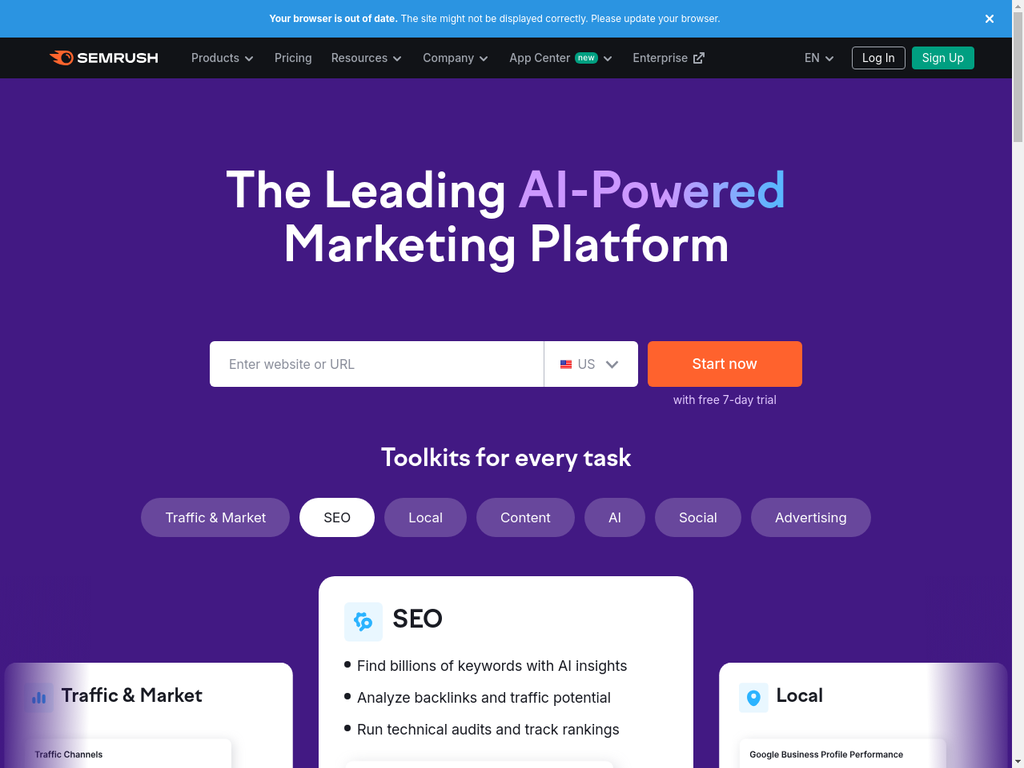
Position tracking runs in the background. You’ll see how your site stacks up against competitors without manual checks. The AI analyzes trends and points out new opportunities.
Content creation gets easier with Semrush’s AI. It suggests topics based on what people search for and lets you audit your existing content for improvements.
Small websites and big companies both get value from Semrush’s automation features.
Pros:
Cons:
Pricing:
5) N8N
N8N is an open-source workflow automation tool that lets you automate SEO tasks without coding. You can connect different SEO tools and build automated workflows for your projects.
Automate keyword research, competitor analysis, and content optimization with custom workflows. Set up automations that run whenever you want, based on triggers you pick.
N8N connects with popular SEO tools like Google Analytics, Search Console, and Airtable. You can also integrate AI tools to power your SEO workflows with artificial intelligence.
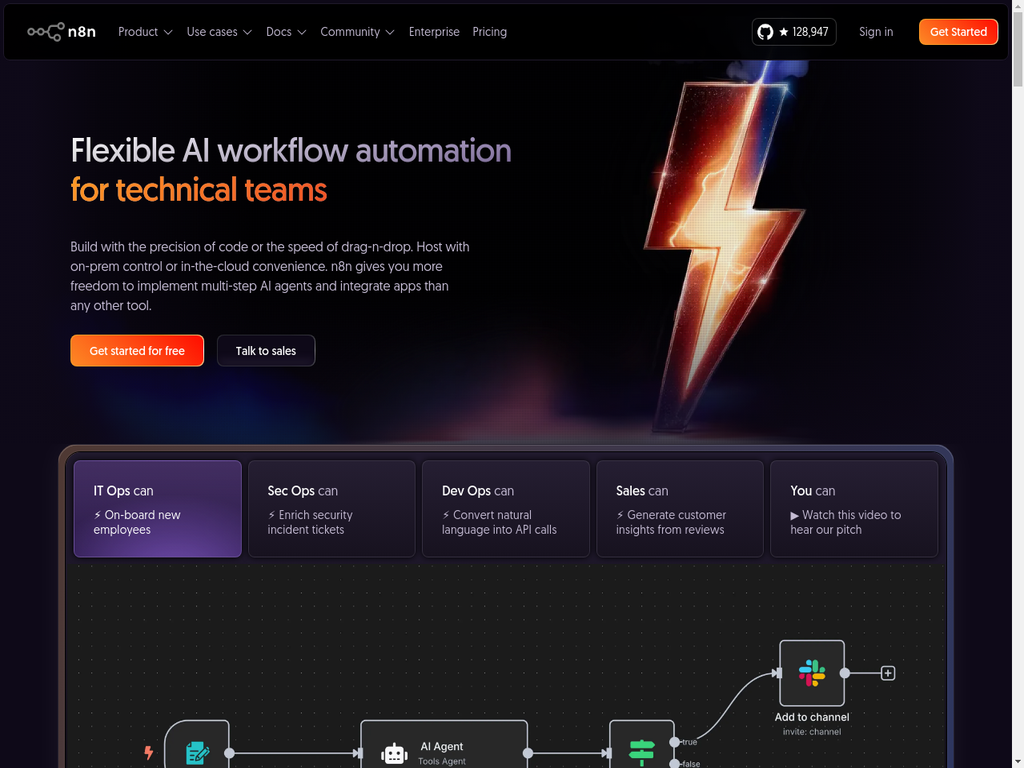
It’s great for repetitive SEO tasks that eat up your day. Automate internal linking, position tracking, and content publishing to WordPress.
Since it’s open-source, N8N is free and customizable. That’s handy if you want to avoid pricey SEO automation tools.
Manage multiple websites at once with custom workflows. If you handle SEO for several clients or your own sites, this is a big plus.
The visual workflow builder makes automation easy to understand. Just drag and drop components—no coding required.
Pros:
Cons:
Pricing:
6) Gumloop
Gumloop is a no-code AI automation platform for building SEO workflows. You can create custom solutions for keyword research, SERP analysis, and content optimization using simple drag-and-drop tools.
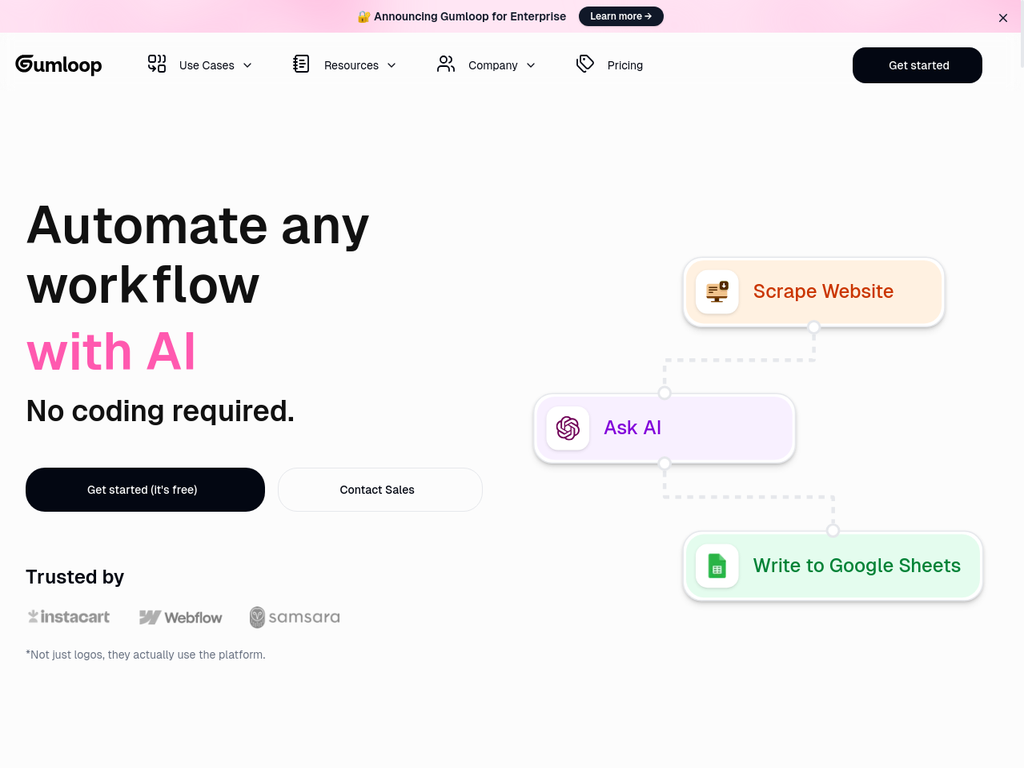 Solopreneurs, marketers, and small teams can use Gumloop for quick SEO wins. Automate web scraping, document processing, and CRM updates without any coding.
Pre-built templates help you set up workflows fast. Connect popular business tools and automate repetitive SEO tasks to save time.
Simplicity and speed are the focus here. You get automated keyword research and content suggestions to boost your search rankings.
Your workflows scale as your business grows. The visual interface handles even complex SEO operations, so anyone can use it.
Pros:
Cons:
Pricing:
7) SupaWrite
SupaWrite handles your entire blog workflow, start to finish. This AI tool takes care of keyword research, content creation, and WordPress publishing in one place.
The platform creates custom images for each blog post that match your brand colors and style. You get up to five branded images per article—no need for designers or boring stock photos.
Each blog post includes research from current sources with citations. The AI adds external links and references, boosting your content’s authority and giving readers extra value.
SupaWrite connects directly to your WordPress site. It handles formatting, image optimization, meta descriptions, and SEO settings automatically, so publishing is a breeze.
Your brand stays consistent across all your content. Readers start to recognize your posts, which helps build trust and engagement.
You don’t have to stress about heading structure or technical SEO. SupaWrite formats everything correctly when it publishes to WordPress.
How AI Tools Enhance SEO Automation
AI tools are changing how people approach SEO. They cut down manual work and give you sharper data insights.
These systems analyze huge amounts of information quickly and update you as search rankings shift.
Reducing Manual Workflows
AI tools jump in and handle repetitive SEO tasks that usually eat up your day. You can automate keyword research, content optimization, and technical audits without slogging through every step.
Content creation speeds up a lot with AI. The tools write meta descriptions, generate title tags, and create SEO-friendly outlines in minutes.
Link building gets easier, too. AI finds relevant websites for outreach and helps you track who’s linking back to you.
Technical SEO audits run automatically. The tools scan for broken links, slow pages, and missing alt tags without you checking every page.
You save time on these basics:
- Writing meta descriptions
- Finding broken links
- Checking page load speeds
- Creating XML sitemaps
- Monitoring keyword rankings
Best Practices When Integrating AI into SEO Strategies
Successful AI integration means matching the right tools to your SEO goals and keeping your data secure.
Aligning Tools with SEO Goals
Figure out your specific SEO needs before you pick any AI tools. Start by listing your main headaches—maybe keyword research, content creation, or technical audits.
Content optimization tools are best for blogs and landing pages. Use these if you need help with meta descriptions, title tags, or structure.
Keyword research AI fits teams who struggle to find new search terms. These tools help you discover long-tail keywords and spot search intent trends.
Technical SEO automation suits big sites with tons of pages. Pick these if you need help with site audits, broken links, or crawl errors.
Set clear metrics before you start. Track things like:
- Organic traffic growth
- Keyword ranking improvements
- Content creation speed
- Time saved on manual tasks
Test one tool at a time. That way, you’ll actually see which AI features move the needle. It’s easy to get lost if you try too many tools at once.